

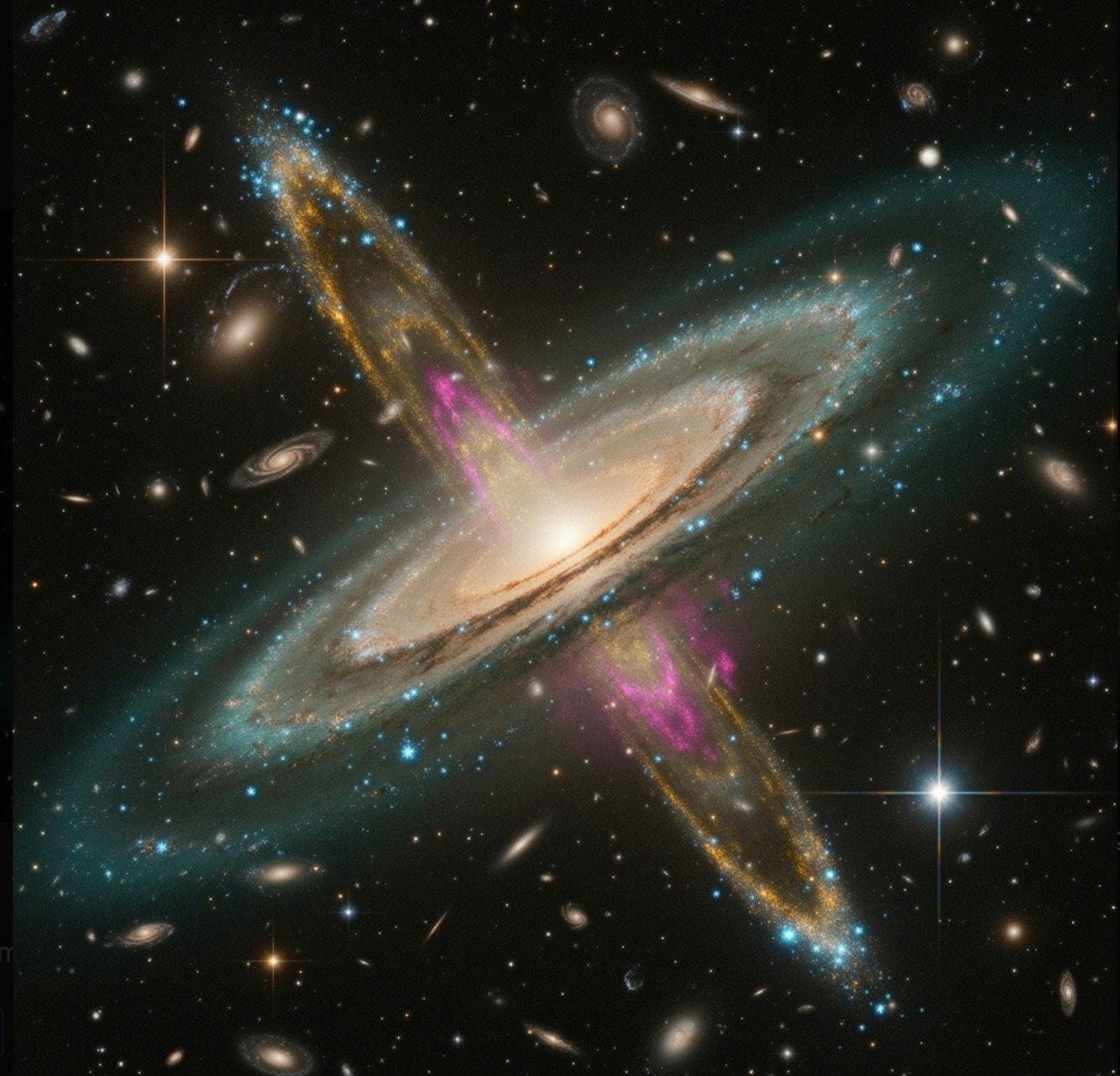
NASA JWST ने 12-12.6 अरब साल पुरानी 9 compact galaxies discover कीं – ‘Astronomy’s Platypus’। Point-source appearance लेकिन narrow emission lines, ना quasar core। Haojing Yan के University of Missouri team ने AAS 247 में present।
JWST ने खोजा ‘Astronomy’s Platypus’: प्रारंभिक ब्रह्मांड के taxonomy-defying galaxies!
NASA के James Webb Space Telescope ने ब्रह्मांड के infancy (12-12.6 billion years ago) में 9 अजीब galaxies discover कीं। University of Missouri के Haojing Yan की team ने इन्हें “Astronomy’s Platypus” नाम दिया – जैसा platypus biology में mammal-bird-reptile hybrid है, वैसे ये galaxies compact point-sources हैं लेकिन quasar characteristics नहीं दिखाते। AAS 247 (Phoenix, Jan 2026) में present। ये discovery galaxy formation models को challenge करती।
2000+ JWST survey sources में से 9 चुने – CEERS, JADES fields से। Webb की sharp vision में भी point-like, लेकिन spectra surprising।
प्लेटिपस गैलेक्सीज़ की 7 unique features
- Ultra-compact: Point-source appearance even at z=10-11।
- Faint brightness: Quasar-level नहीं।
- Narrow emission lines: Slow gas kinematics।
- No broad-line region: Active SMBH evidence missing।
- 12.3B light-years distant: Cosmic dawn era।
- Structured spectra: Star-forming galaxy जैसे।
- Taxonomy-defying: Existing classes में fit नहीं।
Quasar vs Platypus vs Green Pea: Spectral comparison
Early universe context: क्यों revolutionary?
Big Bang के 1-2 billion साल बाद – galaxy assembly phase। Standard model: gas clouds collapse → SMBH seed → quasar। लेकिन platypus गैलेक्सीज़ quiet formation suggest करते। Possible explanations:
- Low-mass proto-galaxies: Building blocks।
- Dust-obscured AGN: Hidden SMBH।
- New population: Unknown galaxy type।
Yan: “Quiet formation before chaotic mergers?”
Discovery methodology: कैसे मिले?
- JWST surveys: CEERS, JADES, COSMOS-Web।
- Point-source selection: 2000 candidates।
- NIRSpec spectroscopy: Emission line analysis।
- Spectral fitting: Velocity profiles measure।
- Multi-wavelength: IR+UV data cross-check।
9 Platypus galaxies: location map
- 4 from CEERS (Cosmic Evolution Early Release Science)。
- 3 from JADES (JWST Advanced Deep Extragalactic Survey)。
- 2 from other fields।
Redshift range: z=10.5-11.2 (12.0-12.6 billion years ago)।
Cosmic implications: 5 paradigm shifts
- Galaxy formation: Quiet proto-galaxies possible।
- Quasar precursors: Non-AGN compact objects।
- SMBH seeding: Direct collapse model challenge।
- Reionization sources: Faint contributors।
- Taxonomy expansion: New galaxy class।
Next steps: JWST Cycle 3 observations
- High-res NIRSpec: Chemical abundances।
- MIRI mid-IR: Dust properties।
- NIRCam imaging: Morphology resolve।
- Larger sample: 100+ platypus candidates।
Team को Director’s Discretionary Time मिला।
Platypus vs biology analogy: क्यों perfect?
Platypus: egg-laying mammal + duck bill + venom। Astronomy platypus: compact+quasar-like imaging लेकिन narrow-line spectra। दोनों “misfit” categories challenge करते। Yan: “Genetic code जैसा spectra additional info देता।”
Early universe timeline context
text13.8B years ago: Big Bang
13.0B: First stars (Pop III)
12.6B: First galaxies (platypus era)
12.0B: Reionization peak
11.0B: Quasar population boom
Future discoveries expected
Webb के remaining life में cosmic dawn secrets unlock। Platypus गैलेक्सीज़ first chapter। Yan team: “Background में मिले, अब focus करेंगे।”
ये discovery बताती है – ब्रह्मांड अभी भी surprises देगा। Taxonomy-defying objects science को evolve करते हैं!
5 FAQs














Leave a comment